Edmonton’s Poet Laureate, Mary Pinkoski
I have read that the secret to a good fire
is in the beginning with the search for kindling.
The key is to never underestimate the potential
of any piece of material for its ability to harbor
a spark.
The kindling is everywhere;
just waiting to be gathered,
waiting to be set aflame.
We are all bundles of eager tinder;
fires itching to activate.
Your teeth, they are flint
and your tongue, it is steel.
Your story is a hammer,
a striking of teeth against tongue
until there is a spark.
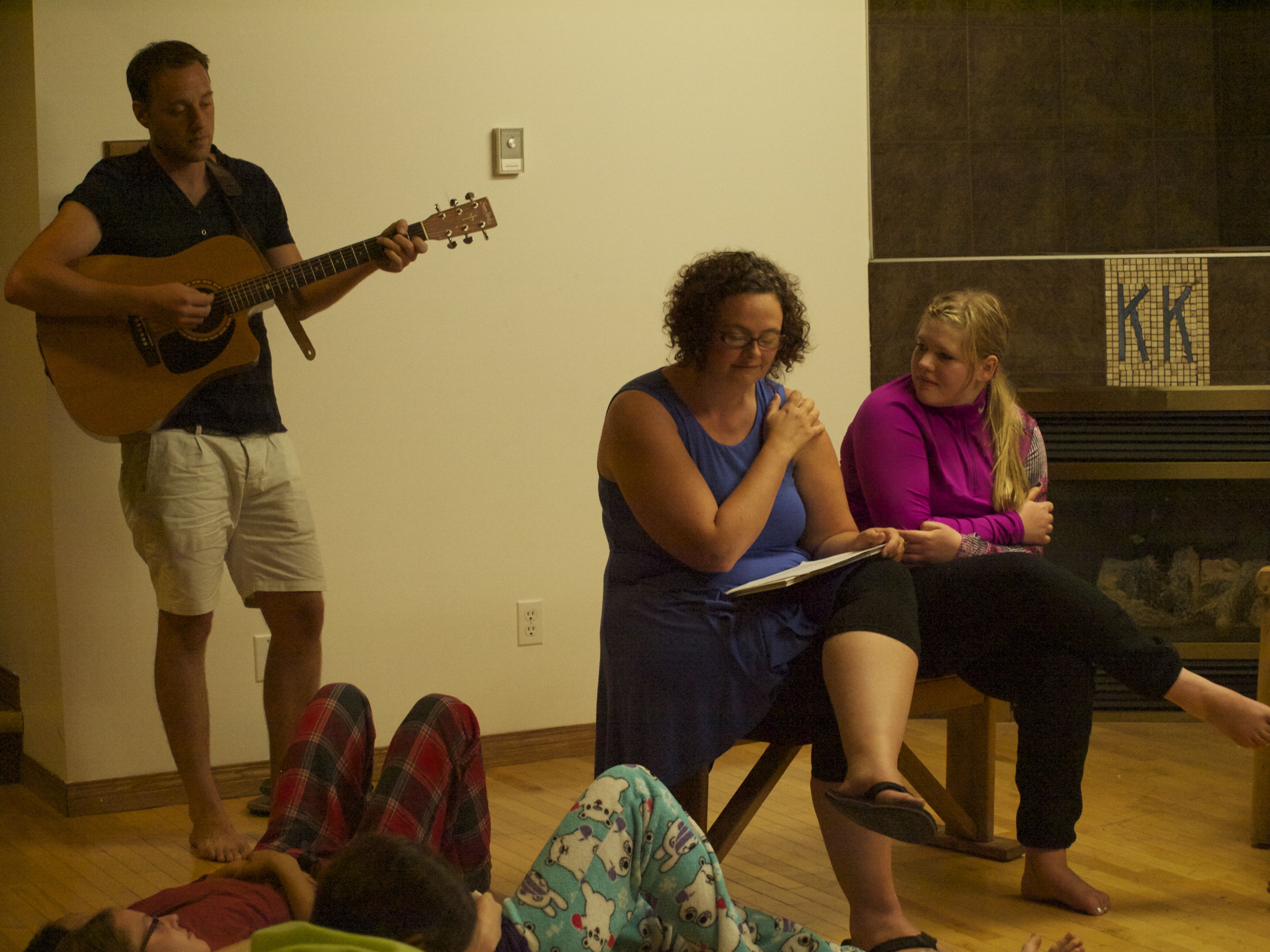
The poet Muriel Rukeyser once wrote: “Say it. Say it. The universe is made of stories, not atoms.” I have come to teaching spoken word poetry in the community knowing this to be true; that each person I interact with holds within themselves a collection of stories. I believe that when these stories are spoken, and actively heard, a community is formed and fostered. Spoken word, like most of the arts, creates a unique learning environment that allows community to form, which I think happens more readily in a non-academic setting that is not bound by curricular expectations.
In my work as a spoken word poet, I have been given the fortunate gift of getting to tell my stories and listening to other’s stories, much of this being with youth. It is this act of listening and speaking the stories that matter to us that, I believe, is truly essential in working towards transformation in the world.
My work has become exceptionally important to me due to its ability to allow youth to speak their stories and give them a voice where they sometimes may not otherwise have one. In addition, this requires everyone else in the room to acknowledge and hear the stories of the speaker. The byproduct of this has been the opportunity to witness the power of spoken word poetry in giving voice to student’s personal histories. When this happens I have watched communities form based on hearing the narrative threads that weave through our lives, and based on giving value to these threads. I think this happens more readily and easily in non-academic settings based on the fact that workshops outside of academic settings are intrinsically freed from hierarchies of academic settings and begin from a foundation of community and collective voices.
Once we begin to hear our student’s stories, even recount their stories, we are forming a connection to them and to their lived experiences and the creation of a collective story.
I believe that spoken word is a unique and engaging art form that has the ability to manifest transformation. Spoken word poetry gives voice to the many stories we house inside of us. Furthermore, in speaking and actively hearing these stories we are working to bring our communities, our world, and ourselves together in compassion and understanding.
I like to think that each of us contains so many stories and mythologies of who we are and all of them contain truths about ourselves. And we are all doing our best to sort them out and make some sense of where we find ourselves in the world. We are on a trajectory of transformation and the sharing of our voice and our collective stories will take us there.
To live you will need fire
but to become truly alive,
we must each one of us,
stand in unison and
burn with abandon.